

Flores
Flights      Hotels      Car Hire    Tours        

FLORES

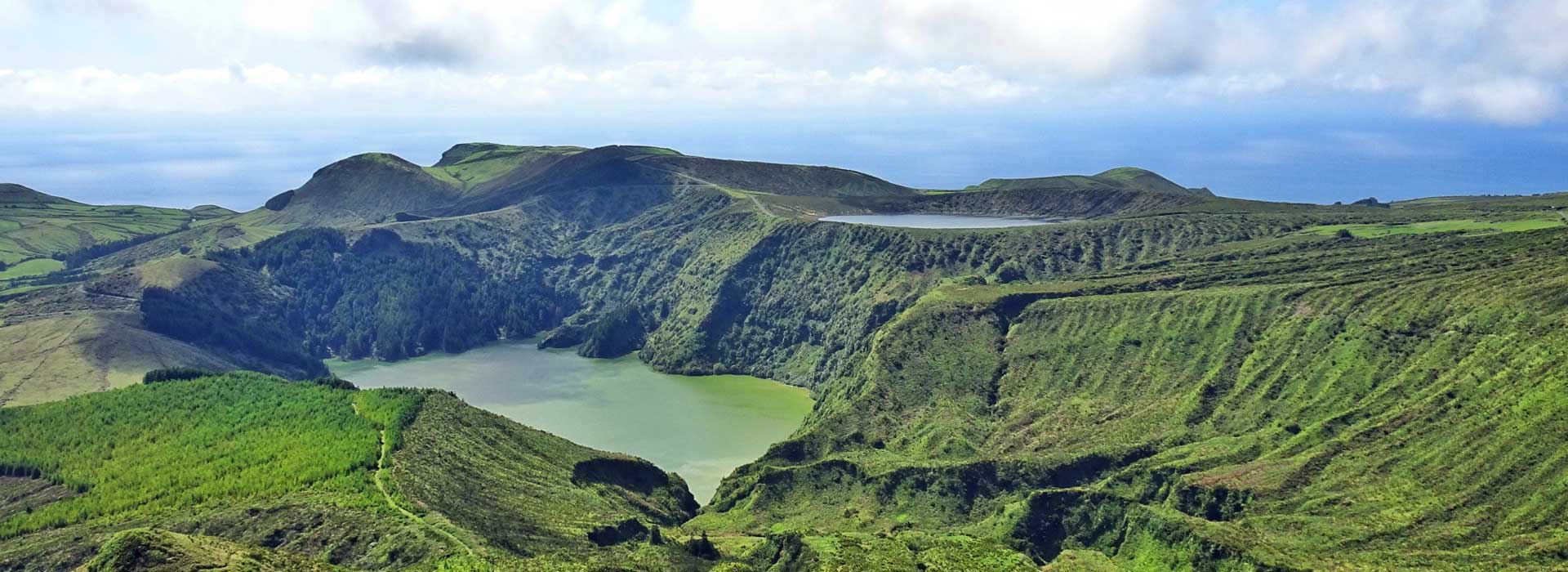
Flores, Azores – even the name sounds like a sigh of relief. Known as the “Island of Flowers,” this green jewel is the westernmost point of Europe, dangling out in the Atlantic as if it were unsure whether to belong to the Old World or to the Americas. To arrive here is to feel both remote and oddly central, standing at the edge of continents. Recognised as a UNESCO Biosphere Reserve, Flores offers nature at its purest: jade-green valleys, cascading waterfalls tumbling from volcanic cliffs, mirror-like crater lakes, and a jagged coastline where waves gnash at black rock.

History weighs lightly here. Portuguese explorers discovered Flores in the 15th century, and settlers trickled in during the 16th century. Agriculture, fishing and whaling shaped their survival; the island’s rugged isolation bred resilience and a certain quiet pride. Even today, you can sense it in the way locals preserve traditions—festivals bursting with colour, music echoing across stone-walled villages, and whitewashed chapels with bright volcanic stone trims.

For the traveller, Flores is not a place of haste. It’s an island for long walks, where hydrangeas hem in the lanes, or for picnics by lakes like Lagoa das Sete Cidades’ quieter cousins. Adventurers can trace the Rocha dos Bordões, a cathedral-like cliff of basalt columns, or kayak beneath waterfalls that plunge directly into the ocean. And in the evenings, there’s no casino or grand theatre—only seafood fresh from the harbour, Azorean wine, and the Atlantic roaring like an ancient lullaby. Flores may be small, but it embodies the whole romance of the Azores: wild, poetic, timeless. For those yearning to escape the well-trodden, this “Island of Flowers” offers not just a visit, but a gentle recalibration of the soul.

SANTA CRUZ

Santa Cruz das Flores

|  Santa Cruz das Flores

Santa Cruz das Flores, the charming capital of Flores Island, is the kind of place that makes you wonder if you’ve stepped into a storybook. Perched on the island’s eastern coast, this little town gazes out at the Atlantic with calm assurance, as though it knows it’s sitting on the very edge of Europe. Whitewashed houses with red roofs tumble towards the harbour, where fishing boats bob lazily, and the air smells of salt, hydrangeas, and fresh bread.

Founded in the 16th century, Santa Cruz das Flores grew from a settlement of hardy fishermen and farmers into the cultural and administrative heart of the island. Its history is etched into cobbled streets, old chapels, and the baroque Igreja Matriz da Nossa Senhora da Conceição, whose ornate interior feels far grander than the town’s modest size suggests. A visit here is a reminder that beauty doesn’t need scale—it needs authenticity.

Stroll to the harbour and you’ll find the old whaling station, now transformed into the Museu das Flores, a gentle nod to the island’s whaling past and its transition toward conservation and sustainability. A short wander uphill brings you to viewpoints with sweeping vistas of green cliffs plunging into a restless sea. On clear days, Corvo—the Azores’ smallest island—sits on the horizon like a punctuation mark.

What makes Santa Cruz das Flores so compelling is its pace. This is not a place for rushing. It’s for sitting in a café with a strong Azorean coffee, chatting with locals about fishing or football, or walking to the natural swimming pools carved by lava rock.

SETE LAGOAS

The Sete Lagoas of Flores—seven volcanic crater lakes scattered like emerald jewels across the island’s high plateau—are a reminder that nature sometimes shows off. Each lagoon has its own character: Lagoa Negra broods in dark mystery, while Lagoa Comprida stretches out like a sheet of polished glass. Together, they form a dreamlike landscape that feels at once prehistoric and strangely comforting, as if the earth itself were taking a breath.

Getting here is part of the adventure. The Sete Lagoas lie within the central plateau of Flores, reached by winding mountain roads from Santa Cruz das Flores or Fajã Grande. Most visitors arrive by car, but the true pleasure is to hike—paths crisscross the uplands, taking you through mossy woods, fields dotted with hydrangeas, and ridgelines where the Atlantic wind seems to sweep away all worldly concerns.

The views are unforgettable. Stand between Lagoa Negra and Lagoa Comprida and you’ll feel like you’re on the roof of the Azores, gazing down at lakes painted in different shades of green and blue. On clear days, the surrounding cliffs and waterfalls frame the scene like a Renaissance painting. On misty days, the lagoons appear and disappear with theatrical timing.

Facilities are minimal—this is Flores at its most unspoiled. There are parking areas and marked trails, but no cafés or souvenir shops to distract you. Bring water, snacks, and the certainty that your mobile phone will spend most of the day sulking without signal. That’s part of the appeal.

Sete Lagoas

|  Sete Lagoas

TOP TOURS OF FLORES

Boat Trip to the Caves and Waterfalls of Flores Island

Embark on an unforgettable Flores Island tour, where caves, waterfalls, and wild Atlantic beauty take centre stage. Sail through crystal-clear waters to explore dazzling coastal caves, their rock formations sculpted by centuries of waves. Then, marvel at Flores’ majestic waterfalls, cascading from volcanic cliffs straight into the sea—perfect for a refreshing dip or dreamy photo. With expert local guides sharing stories and safe, comfortable boats, this adventure is pure Azorean magic.

(54) | 1.5 Hr | ✔ Free Cancellation

Book Online ►

Flores Island: Full-Day Guided Tour

Discover the best of Flores Island on this full-day guided tour, starting from Santa Cruz and winding through picturesque villages like Cedros and Ponta Ruiva, home to some of the island’s finest viewpoints. Explore the serene Branca and Seca Lakes before pausing for lunch, then marvel at the breathtaking Poço do Bacalhau and the enchanting Poço da Ribeira do Ferreiro waterfall. The adventure continues with visits to the iconic Rocha dos Bordões and the famous Sete Lagoas, making this the ultimate Flores experience.

(80) | 7 Hr | ✔ Free Cancellation

Book Online ►

Santa Cruz das Flores: East Coast Exploration and Snorkeling

Santa Cruz das Flores: East Coast Exploration and Snorkelling

Plunge into the crystal-clear waters of Flores Island on an unforgettable snorkelling tour along its wild east coast. Swim in some of the most untouched waters of the Azores, where dazzling marine biodiversity thrives among striking geological formations. Explore mysterious sea caves and waterfalls once used as pirate hideouts, adding a dash of history to your adventure. With breathtaking views above and a magical underwater world below, this Flores snorkelling experience is the perfect blend of nature, history, and pure aquatic bliss.

(5) | 3 Hr | ✔ Free Cancellation

Book Online ►

WHERE TO STAY IN FLORES

Inatel Flores Hotel

Inatel Flores Hotel ★ ★ ★ ★

8.6/10 Very Good 67 verified customer reviews)


This is a hotel that actually celebrates where it is! Inatel Flores perches above Santa Cruz like a contented seabird, with panoramic views of the Atlantic that make you gasp into your morning coffee. Rooms are bright, comfortable, and mercifully uncluttered, while the restaurant dishes up excellent Azorean seafood with a flourish. A swimming pool gazes out to sea as if it knows it’s won the beauty contest. The real speciality here, however, is location: just minutes from the airport, the harbour, and the cliff-edge viewpoints that define Flores. Think of it as the island’s stylish front porch, where travellers can marvel at the horizon and feel outrageously smug about being at Europe’s far edge.

Zona do Boqueirao, sn, Santa Cruz das Flores, Azores, 9970-390, Portugal.
39° 27' 46.5" N | 31° 07' 49.7" W

Check Availability

Aldeia da Cuada

Aldeia da Cuada ★ ★ ★

9.2/10 Very Good (39 verified customer reviews)


At the Ocidental Hotel in Lajes das Flores, one suspects the Atlantic itself has checked in as the permanent guest. Balconies look out over the sea, the harbour bustles below, and the pace of life is set by fishing boats rather than alarm clocks. Rooms are plain yet perfectly serviceable, while the staff—endlessly cheery—make one feel like the most important guest since Vasco da Gama popped by. The restaurant is a revelation, serving hearty Azorean fare alongside wines that demand second helpings. Its speciality lies in location: in the heart of Flores’ oldest town, with history, harbours, and the Church of Nossa Senhora do Rosário all at your doorstep. It’s simple, unpretentious, and utterly Flores.

Aldeia da Cuada, Fajã Grande, Lajes das Flores, 9960-070, Portugal.
39° 26' 25.8" N | 31° 15' 19.4" W

Check Availability

WHERE TO EAT IN FLORES

Por do Sol

Por do Sol is the kind of restaurant that makes you forgive every pothole you’ve driven over to get there. Perched on the western edge of Flores, this is dinner with a view: sunsets that look staged by Spielberg, and a sea that sulks magnificently. The cooking is deceptively simple but devastatingly effective. Grilled octopus arrives smoky, tender, draped in olive oil; Azorean beef steaks come thick enough to fell a lumberjack. The daily catch is treated with reverence—no fiddly sauces, just char, salt, and lemon. Inside, it’s unfussy: tiled floors, sturdy chairs, family photos. The speciality here is timing—come at dusk, order the limpets, and you’ll feel like the Atlantic has been laid at your table.

Tuesday - Saturday: 12h00 - 14h30/19h00 - 21h30, Sunday & Monday: CLOSED
Ilha das Flores, Fajazinha, Portugal.
39° 26' 09.9" N | 31° 15' 23.5" W
+351 292 552 075

Por do Sol

Restaurante O Mergulhador

O Mergulhador — “The Diver” — is Santa Cruz’s most literal restaurant: perched above the Atlantic, its terrace practically dares you to leap in after your meal. The menu is seafood-heavy, naturally, but not in that predictable, “another grilled tuna steak” sort of way. Here, the house special is polvo à lagareiro — octopus roasted until its tentacles yield like silk, draped in garlic and olive oil. There’s also a cracking seafood rice, dense with clams, shrimp, and whatever the fishermen dragged in that morning. The interior is bright and nautical without kitsch, the kind of place where you sip chilled Vinho Verde as the ocean pounds beneath. It’s less dinner, more an Azorean opera conducted by salt and waves.

Friday – Wednesday: 12h00 – 15h00/19h00 – 22h00, Wednesday: CLOSED
R. Dr. Armas da Silveira 30 R/C, 9970-320 Santa Cruz das Flores, Portugal.
39° 27' 06.5" N | 31° 07' 35.6" W
+351 292 592 030

Restaurante Casa Nostra

POÇO DA RIBEIRA DO FERREIRO

Poço da Ribeira do Ferreiro (Alagoinha)

|  Poço da Ribeira do Ferreiro (Alagoinha)

Poço da Ribeira do Ferreiro, also known as Alagoinha, is the kind of place that makes you forget the modern world exists. This natural amphitheatre of cascading waterfalls feels like a scene lifted straight out of a myth. Standing before its emerald-green cliffs, where dozens of thin, silver streams tumble into a serene lagoon, you understand why Flores is called the “Island of Flowers.” It’s raw, romantic, and gloriously unspoiled.

The walk to Poço da Ribeira do Ferreiro is part of the adventure. A short, fairly easy trail leads you through verdant pastures and moss-draped trees until suddenly the lagoon reveals itself, as though you’ve stumbled upon a secret kept by the island for centuries. On calm days, the water mirrors the cliffs and waterfalls, creating a painter’s dream of greens and blues. On stormier afternoons, the falls thunder more dramatically, reminding you of nature’s power.

Visitors come here not for cafés or facilities (there aren’t any), but for silence, fresh air, and the sense that you’ve stepped into another era. Bring sturdy shoes, a picnic, and a camera that can capture wide angles—you’ll need it. Swimming isn’t recommended, but simply sitting by the lagoon is its own kind of therapy.

Poço da Ribeira do Ferreiro is often described as Flores’ most beautiful spot, and for good reason. It embodies the island’s UNESCO Biosphere Reserve status: untouched, wild, and deeply humbling. Whether you’re hiking the island’s trails, chasing waterfalls, or simply yearning for a place to breathe deeply and forget your inbox, this hidden paradise delivers. If Flores has a postcard moment, this is it—a living masterpiece sculpted by water, time, and a little Azorean magic.

FAJÃ GRANDE

Perched dramatically on the rugged west coast of Flores, Fajã Grande is often hailed as the westernmost village of Europe—and it feels every bit like the edge of the world. This tiny settlement is a place where cliffs drip with waterfalls, the Atlantic crashes against black volcanic rock, and the pace of life slows to the rhythm of waves and cowbells.

The approach to Fajã Grande is already an adventure: winding roads cut through emerald pastures, with hydrangeas framing the route like floral sentinels. Once there, the village greets you with whitewashed houses, narrow lanes, and a shoreline that is both dramatic and soothing. Behind the settlement rise sheer cliffs, streaked with dozens of waterfalls that seem to tumble straight from the clouds. Poço da Ribeira do Ferreiro and Poço do Bacalhau are close by.

Adventurers can dive into the natural swimming pools carved into volcanic rock, hike coastal trails with panoramic Atlantic views, or follow footpaths into lush valleys dotted with lakes. The sea here is untamed, yet locals and visitors alike find calm in its constant presence.

Despite its remoteness, Fajã Grande offers small restaurants and cafés where fresh fish, local cheese, and Azorean hospitality are served without fuss. It’s a place where you can sip wine as the sun sinks into the Atlantic—the last sunset in Europe, quite literally.

Fajã Grande

|  Fajã Grande

LAJES DAS FLORES

Igreja de Nossa Senhora do Rosário - Lajes das Flores

|  Igreja de Nossa Senhora do Rosário - Lajes das Flores

Lajes das Flores is the sort of place where you arrive expecting little and leave with your pockets full of sea air, salt spray, and stories you didn’t know you needed. Perched on the southeastern coast of Flores, it is the island’s oldest settlement, a harbour town whose relationship with the Atlantic has always been one of wary dependence. From the quay, you can watch fishing boats rise and fall with the swell, or see locals hauling nets as their ancestors did when whaling was still the industry here. Today, the harbours hum gently rather than roar, but the sea remains the heart of Lajes.

The town is small but immediately welcoming, with cobbled streets lined by whitewashed houses. The centrepiece is the Church of Nossa Senhora do Rosário, a fine 18th-century structure whose twin towers rise modestly above the village. Step inside and you’ll find cool stone walls, gilded woodwork, and that curious stillness particular to Azorean churches—a reminder that faith here has always been both anchor and refuge. For the visitor, Lajes das Flores is about atmosphere and vantage. Walk the breakwater, sit with a coffee by the harbour, and gaze at cliffs streaked with green where waterfalls tumble to the sea. Hikers can head inland toward high pastures and viewpoints like Fajãzinha and Rocha dos Bordões, but the joy of Lajes is in its unhurried rhythm.

This is a town that has endured isolation and storms and emerged with its charm intact. The seafood is excellent, the views are cinematic, and the harbour sunsets have a way of convincing you that you’ve reached the western edge not just of Europe, but of the known world.

HOW TO GET TO AND AROUND FLORES

First, you'll need to reach the Azores from mainland Portugal:
•  Major airlines (like SATA/Azores Airlines and TAP) fly from Lisbon or Porto to Flores Island (airport code: FLW) with a stopover in Ponta Delgada (São Miguel) or Terceira (Lajes).
•  Expect 2–3 connecting flights in total and a travel time of around 6–9 hours, depending on layovers.

Flying to Flores
Daily flights from Ponta Delgada (São Miguel) and Terceira (Lajes) are operated by SATA Azores Airlines. In summer, there are also connections from Horta (Faial) and Corvo, making island-hopping a breeze. The Aeroporto das Flores (FLW) is just outside Santa Cruz das Flores, the island’s main town, and offers car hire, taxis, and shuttle services on arrival.

Hotel Deal in Porto

Ferries connect Flores with nearby Corvo Island year-round. In summer, Atlanticoline runs longer ferry routes linking Flores with Faial, Pico, and São Jorge, but schedules are weather-dependent and less reliable than flights. Ferries dock at Lajes das Flores or Santa Cruz das Flores, depending on the route.
•   Pre-book your ferry crossing with AtlânticoLine Website

The best way to explore Flores Island is by car. Roads wind dramatically along cliffs and through lush valleys, and a rental car gives you the freedom to reach hidden waterfalls, lakes, and viewpoints like Poço da Ribeira do Ferreiro or Rocha dos Bordões. Car hire is available at the airport and in Santa Cruz, but book early — availability is limited in summer.

UTC run buses in Flores, but they are sparse and mostly cater to residents. Services link Santa Cruz with Fajã Grande, Lajes das Flores, and some inland villages, though timetables can be infrequent. Website